

A Personal Health Philosophy

Your
Own Terms

Biohack your body into its healthiest state, naturally, deliberately, and on your own terms.

Start reading
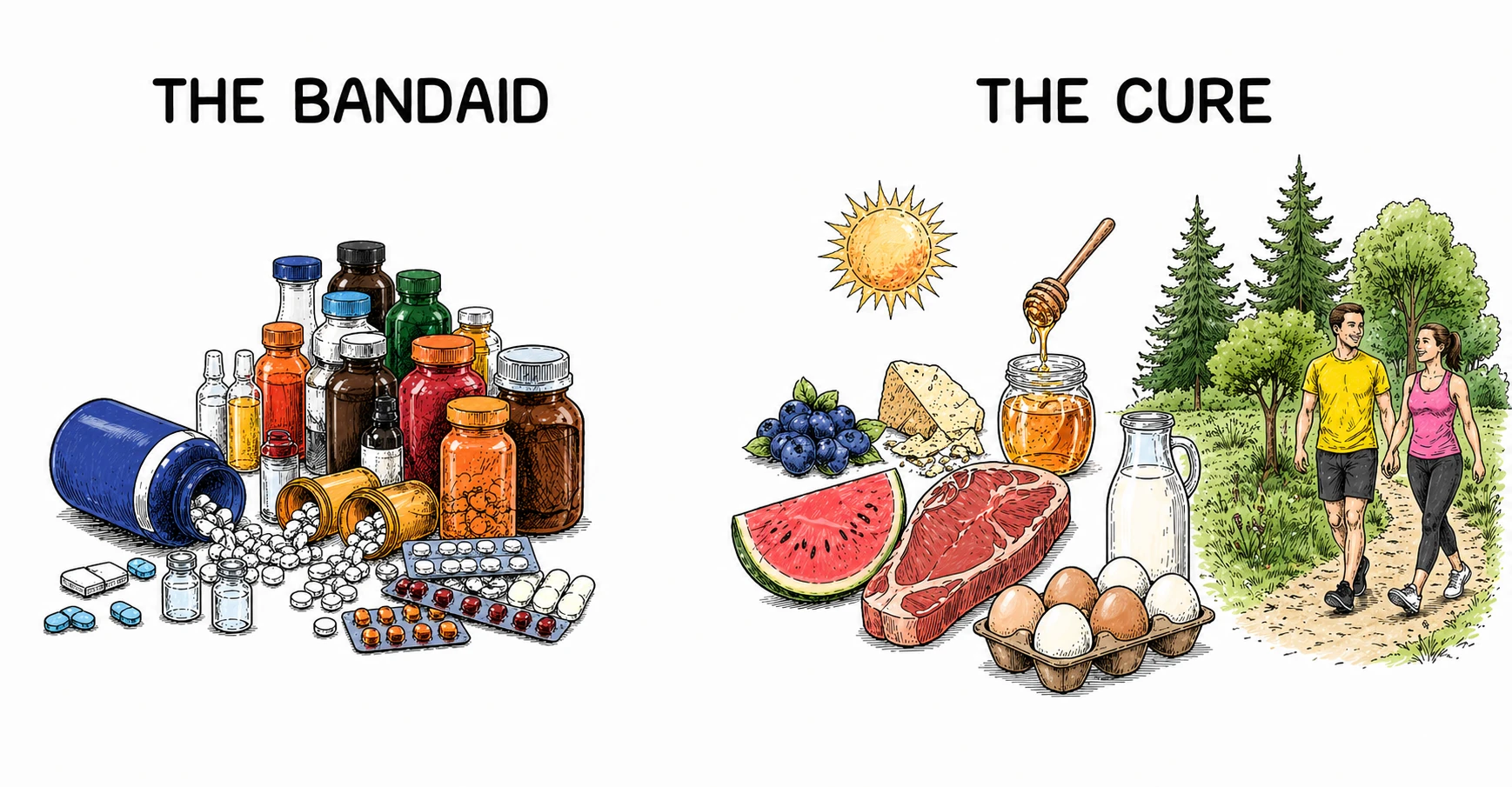
The Cure vs The Bandaid
The Philosophy

Health is not complicated.

It has been complicated for us, by broken food pyramids, pharmaceutical dependencies, and an industrial food system designed to keep us consuming, not thriving. This guide documents a personal journey back to simplicity: using nature, real food, movement, and intentional habits to recover and optimize the human body.

Nothing here is extreme. It is common sense, practiced consistently.

80%

Eating Well

The single biggest lever for transformation.

10%

Staying in Motion

Consistent, natural movement, not punishment.

10%

Habits & Exposure

What you avoid matters as much as what you do.

What you need: the will to persevere, and about 7 hours of movement per week, 5 hours of walking, 2 hours of training.

Pillar I

Eat Well

Forget the government's grain-heavy pyramid. The USDA model, with bread, cereal, and pasta as its base, has coincided with an unprecedented rise in obesity, diabetes, and metabolic dysfunction. It's time to reconsider from the ground up.

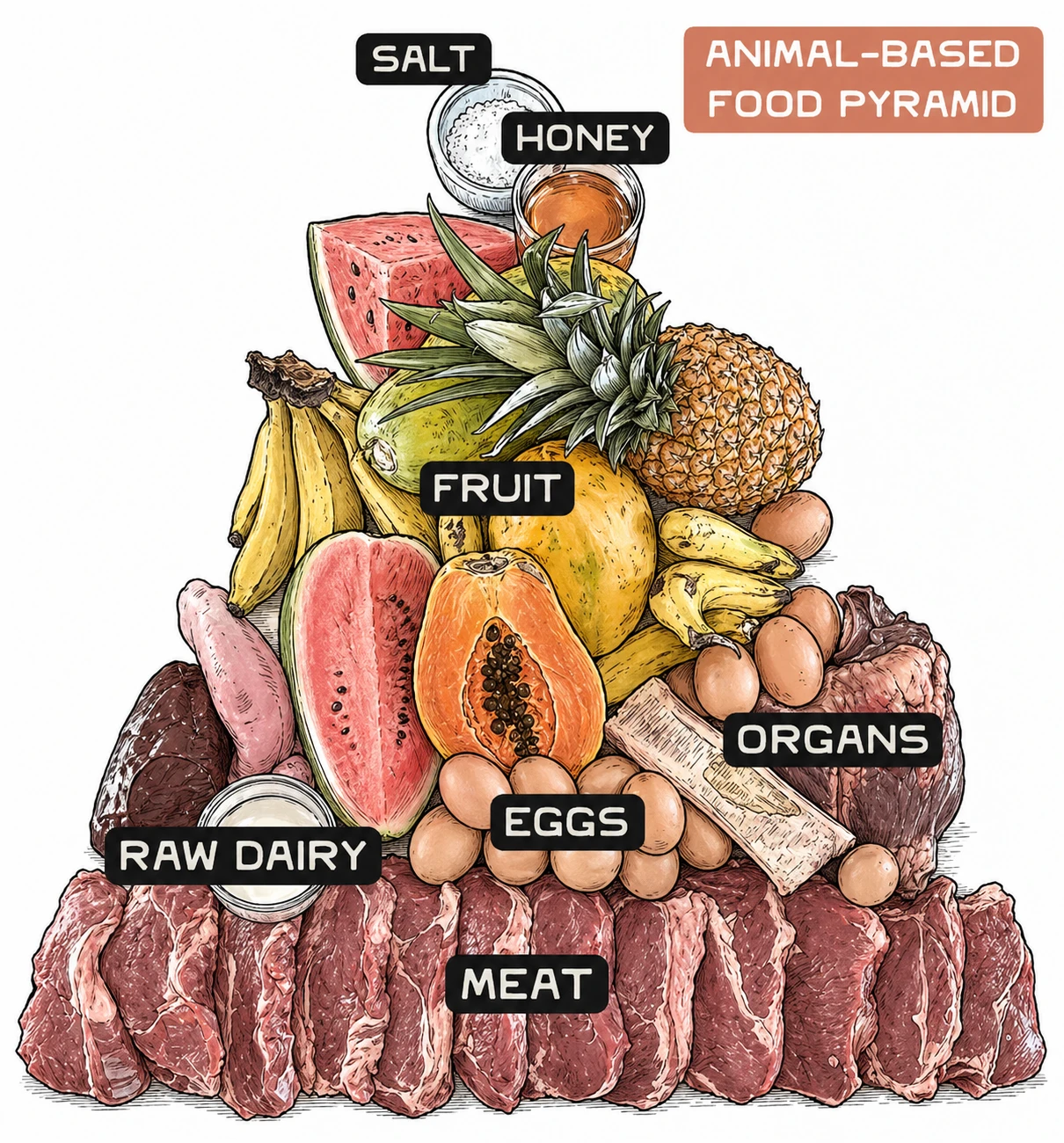
The Real Food Pyramid

Center your diet on animal foods and build from there. This is how humans ate for most of our evolutionary history, before industrial seed oils, refined grains, and processed sugar became dietary staples.

  • Base: Meat and eggs, complete, bioavailable proteins and fats
  • Middle: Raw dairy, organ meats, extraordinarily nutrient-dense
  • Upper: Ripe, local fruit, natural sugars with fiber and enzymes
  • Top: Honey, salt, nature's oldest seasonings
✓ Research Support

A 2024 NIH-published review confirms animal-sourced foods provide zinc, iron, vitamin B12, selenium, and vitamin A in forms significantly more bioavailable than plant sources. Organ meats rank among the most nutrient-dense foods known to science.

⚠ Worth Knowing

Long-term studies show mixed results on high red meat consumption and cardiovascular risk. Quality matters: grass-fed, pasture-raised, and minimally processed sources are preferable. Consult a healthcare provider before major dietary changes.

Food philosophy inspired by:

Follow Paul Saladino MD
Animal-Based Food Pyramid

What to Cut: In This Order

Sustainable elimination beats cold-turkey failure. Work through these in sequence:

  1. Processed food and seed oils
  2. Alcohol and processed sugar drinks, soda, diet soda, energy drinks
  3. Gluten-containing grains, bread, pasta, cereals

If you deal with autoimmune issues, consider also eliminating soy, dairy, and cruciferous vegetables for 30 days and observe the difference.


Know Your Oils

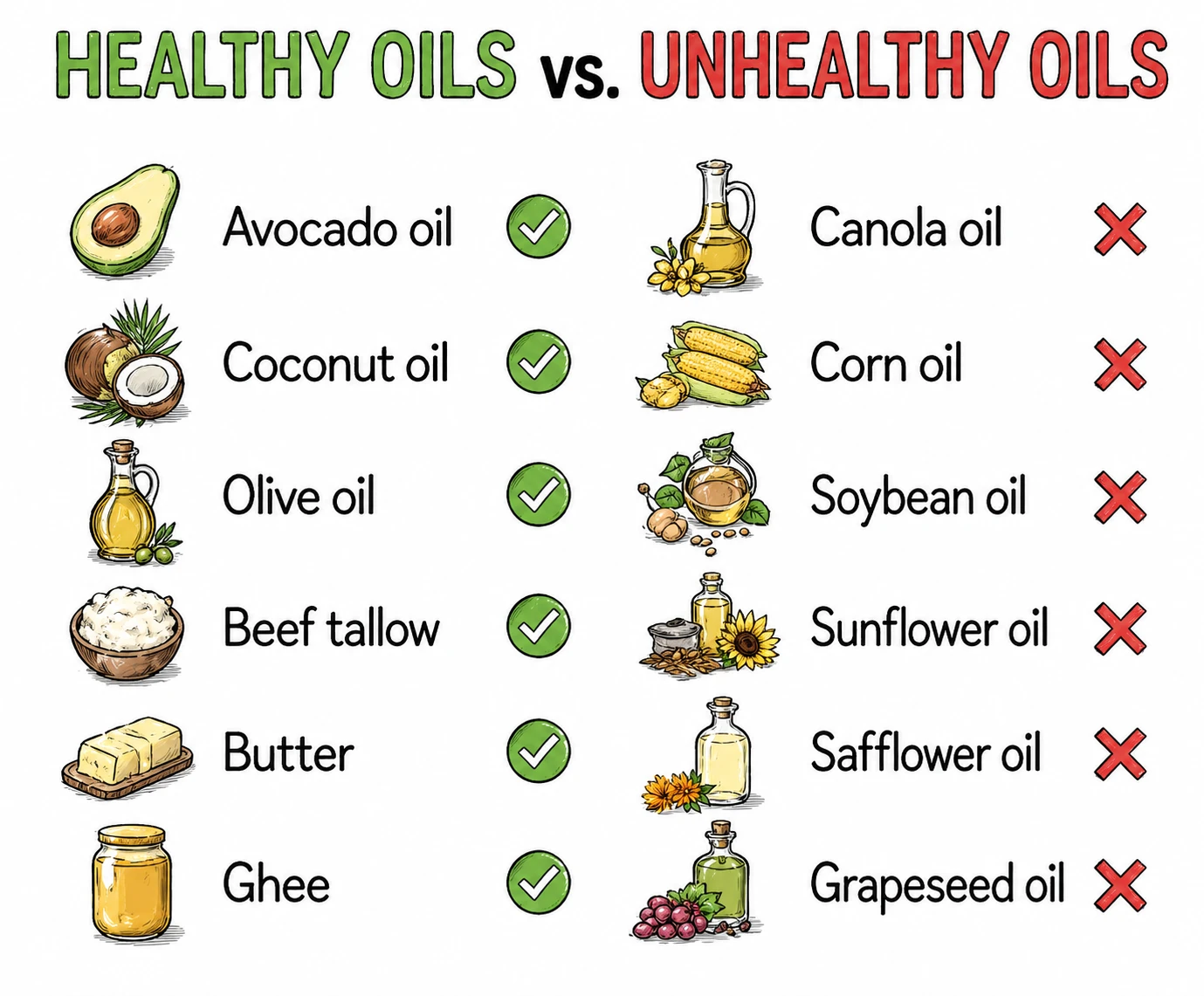
Not all fats are created equal. The processing method and heat stability of an oil matters as much as its source. Cold-pressed, minimally processed fats from animal and traditional plant sources have a fundamentally different chemical profile from industrially extracted seed oils.

Healthy vs Unhealthy Oils
⚠ Worth Knowing

The debate on seed oils is genuinely contested. A 2025 systematic review (Frontiers in Nutrition) found canola and flaxseed oils can improve lipid profiles and glycemic control. A separate 2025 study of 1,900 people found higher linoleic acid correlated with lower inflammation. The concerns center on oxidation at high heat, industrial processing, and the omega-6:omega-3 imbalance in modern diets, all legitimate issues worth weighing.


Drink Real Things

Much of what's marketed as "healthy" or "zero sugar" is heavily processed with long chemical ingredient lists. Drink closer to the source.

✓ Drink These

  • Spring water, all day
  • Good coffee, mold-free, low-acid
  • Tea, powerful and natural
  • Raw milk, nutrient-dense
  • Kefir, best fermented drink
  • Cold-pressed fruit juice
  • Raw honey in water

✗ Skip These

  • Diet Coke, artificial sweeteners
  • Celsius, chemical stimulant list
  • Oatly / almond milk, seed oils
  • Truly & similar, processed alcohol
  • Any "zero sugar" drink with 10+ ingredients
⚠ On Raw Milk

Rich in bioavailable nutrients, probiotics, and enzymes. However, the CDC has linked unpasteurized dairy to 840× more illnesses than pasteurized products in tracked periods. Source from trusted, rigorously tested farms. Higher risk for pregnant women, young children, and immunocompromised individuals.


Clean Your Kitchen

Hormone disruptors often enter the body at the food preparation stage, before you even eat.

  • Replace Teflon and non-stick coatings with cast iron, stainless steel, or ceramic
  • Replace plastic containers and bottles with glass or stainless steel
  • Eliminate aluminum cookware and PFAS-coated packaging

Wash your produce in a baking soda solution, 1 teaspoon per 2 cups of water, soaking 12–15 minutes. A University of Massachusetts study found this removes up to 96% of surface pesticides, far more effectively than plain water.

⚠ Worth Knowing

Baking soda removes surface pesticides only. Systemic pesticides absorbed internally by the plant cannot be washed off. For higher certainty, prioritize organic sourcing for the EWG's "Dirty Dozen" produce list.

This entire health guide is mostly inspired by Adam Nili.

I highly recommend anyone on this journey follows him, his work changed how I see food, health, and what it means to truly thrive.

Adam Nili Follow @itsadamnili
Pillar II

Stay in Motion

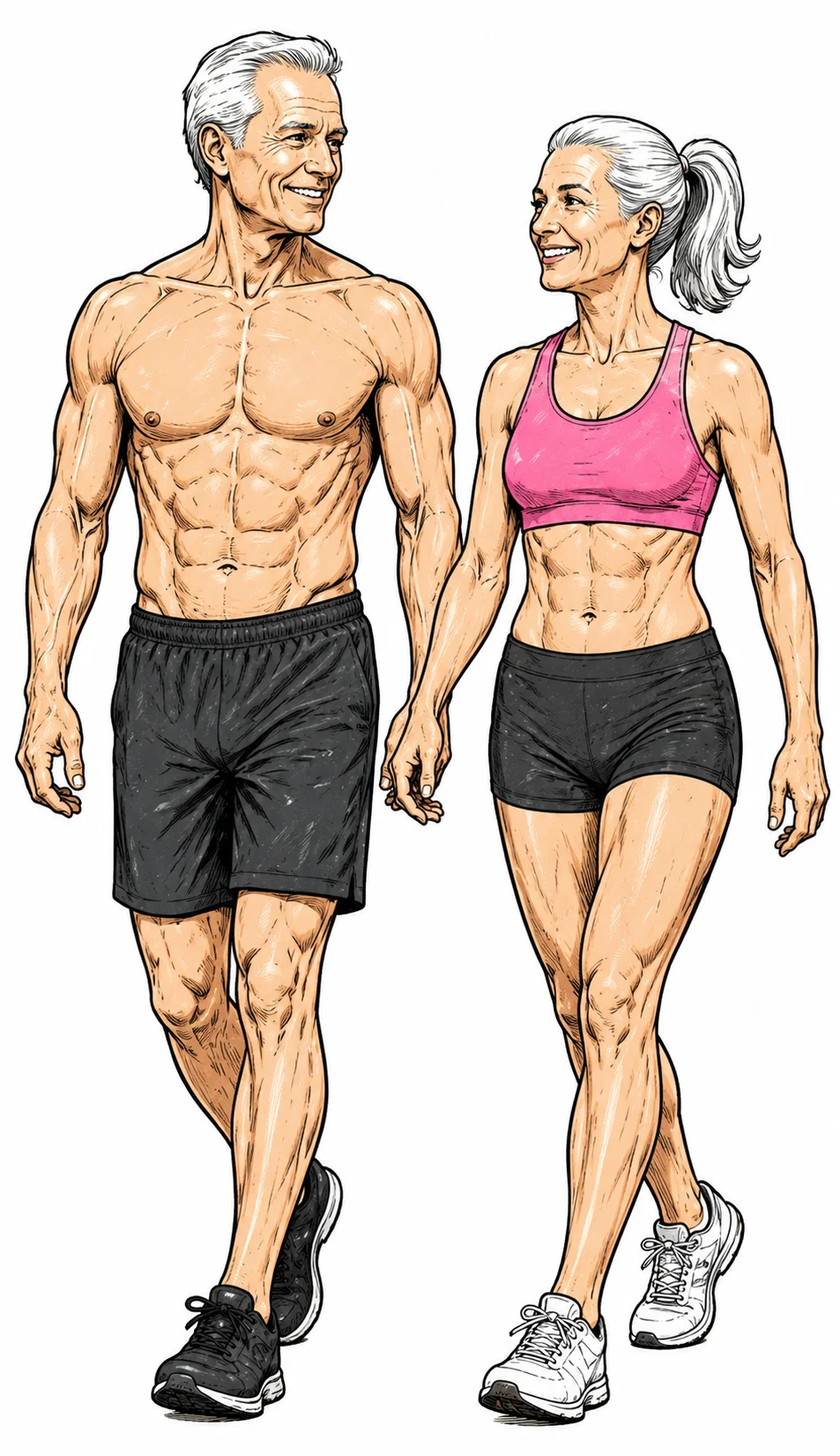
The body reshapes and functions optimally as long as we nourish and train it well. Target 7,500–10,000 steps per day. Seven hours of total movement per week: 5 hours of walking, 2 hours of intentional training. This is not extreme, this is what the human body was designed for.

Most underrated health intervention

Walk in Nature

Walking in parks, trails, and natural settings is among the most researched, lowest-cost interventions for mental and physical health. Even 15–20 minutes in a natural environment produces measurable changes in brain chemistry and nervous system state.

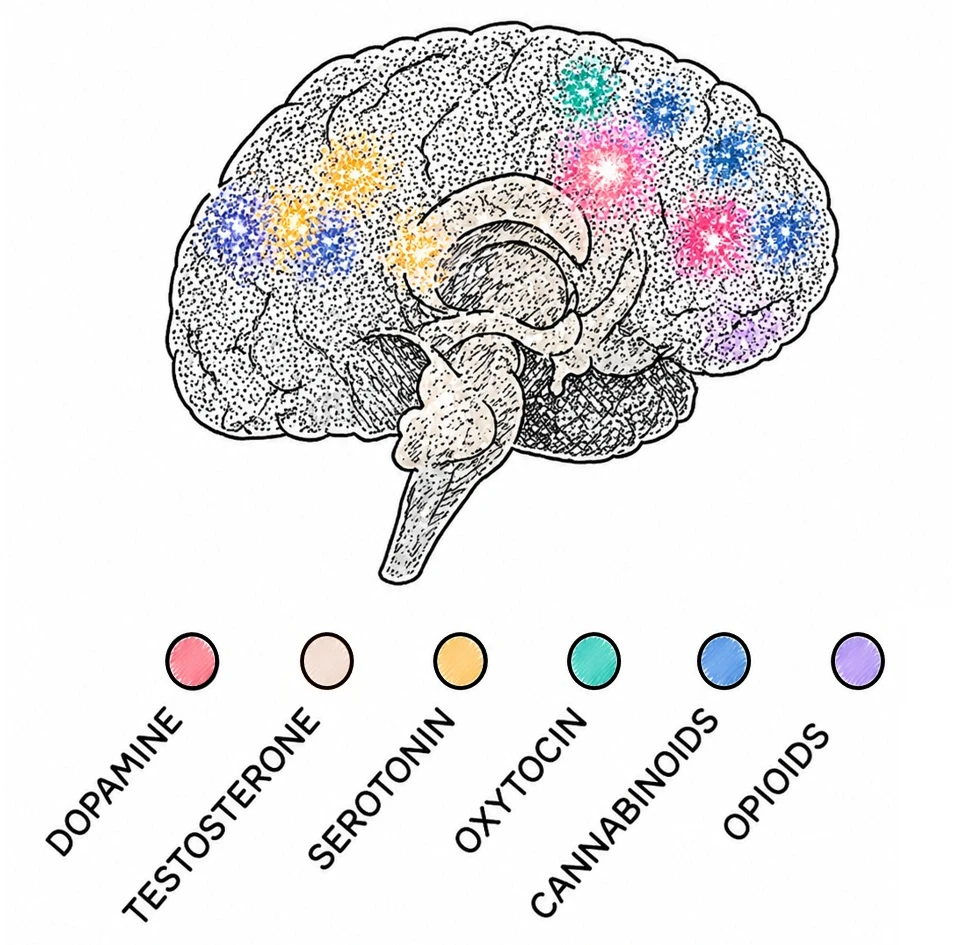
Your brain on a nature walk
✓ Research Support

Studies confirm just 15–20 minutes outdoors measurably reduces salivary cortisol (stress hormone). Multiple peer-reviewed studies link nature exposure to increased dopamine and serotonin, improved autonomic nervous system regulation, and enhanced mood and cognitive performance.

What a Challenging Nature Walk Creates

Your body is a chemistry lab. Varied terrain, natural light, and physical exertion unlock a cascade of neurochemicals no supplement can replicate.

🎯

Dopamine

Motivation & Reward

When you navigate new terrain, spot wildlife, or reach a summit, your brain's reward circuit fires. Dopamine is the fuel of curiosity, drive, and goal-oriented behavior. The sustained release from nature walks is fundamentally different from the hollow dopamine spikes of social media or ultra-processed food.

Testosterone

Vitality & Strength

Physical exertion in natural light, especially morning sun, supports healthy testosterone production. Challenging terrain engages large muscle groups and stimulates hormonal responses associated with vitality, confidence, and physical strength in both men and women.

☀️

Serotonin

Mood & Calm

Serotonin is largely regulated by light. Sunlight hitting your eyes and skin drives serotonin synthesis. Walking outdoors combines three powerful serotonin inputs simultaneously: physical movement, natural light, and green scenery. This is why a morning walk feels fundamentally different from an indoor workout.

🌿

Oxytocin

Connection & Trust

Often called the "bonding hormone," oxytocin is triggered by connection, with others, animals, and the natural world itself. The sensation of earth beneath your feet, the sight of trees, the sound of water, these engage the same neurological circuits that produce belonging and safety.

🌊

Endocannabinoids

Flow State & Ease

Your body produces its own cannabinoid compounds during sustained physical activity. This is the neurological basis of "flow state", that effortless, absorbed feeling of being fully present. Varied, sustained outdoor movement produces endocannabinoid release without any external substance.

🔥

Endorphins

Euphoria & Resilience

Endorphins are the body's natural pain-relief and euphoria system. Challenging terrain, hills, uneven ground, elevation gain, triggers endorphin release, building genuine resilience, reducing pain perception, and leaving you feeling profoundly well long after a demanding walk.

Barefoot and Minimalist Movement

Conventional cushioned footwear weakens the intrinsic muscles of the foot over time by removing the natural feedback the foot was designed to handle. Gradual barefoot and minimalist walking rebuilds what modern shoes suppress.

✓ Research Support

Research from the University of Liverpool found minimalist footwear worn for six months increases foot muscle strength by 57.4%. A separate study found minimalist walking increased foot muscle size and strength by an average of 41% over eight weeks.

⚠ Transition Carefully

Sudden shifts to barefoot or minimalist footwear can cause stress fractures or Achilles tendon issues in those accustomed to cushioned shoes. Build gradually over weeks to months, starting with short daily sessions on natural, soft ground.


Train Smart

  • Core training: Most back pain originates from a weak core, especially the lateral (side) abdominals. These are frequently undertrained. Target them specifically.
  • Flexibility: The most neglected pillar. Improves posture, reduces injury risk, and keeps you mobile as you age. Incorporate daily.
  • Compound movement patterns: Push, pull, hinge, squat, carry. Compound lifts over isolation machines.
  • Hang and move between work: Aim to hang from a bar for up to 60 seconds each day. It decompresses the spine and builds grip strength. During work breaks, try 3–5 pull-ups, push-ups, or squats. Aim for 10 if you can, but stopping at 3–5 is perfectly fine. The goal is staying healthy and moving consistently, not pushing to failure.
  • Natural fabrics: Synthetic workout clothes (polyester, spandex, nylon, viscose) release microplastics and may leach endocrine-disrupting chemicals under heat and sweat. Opt for 100% cotton or 100% linen.
Pillar III

Habits & Exposure

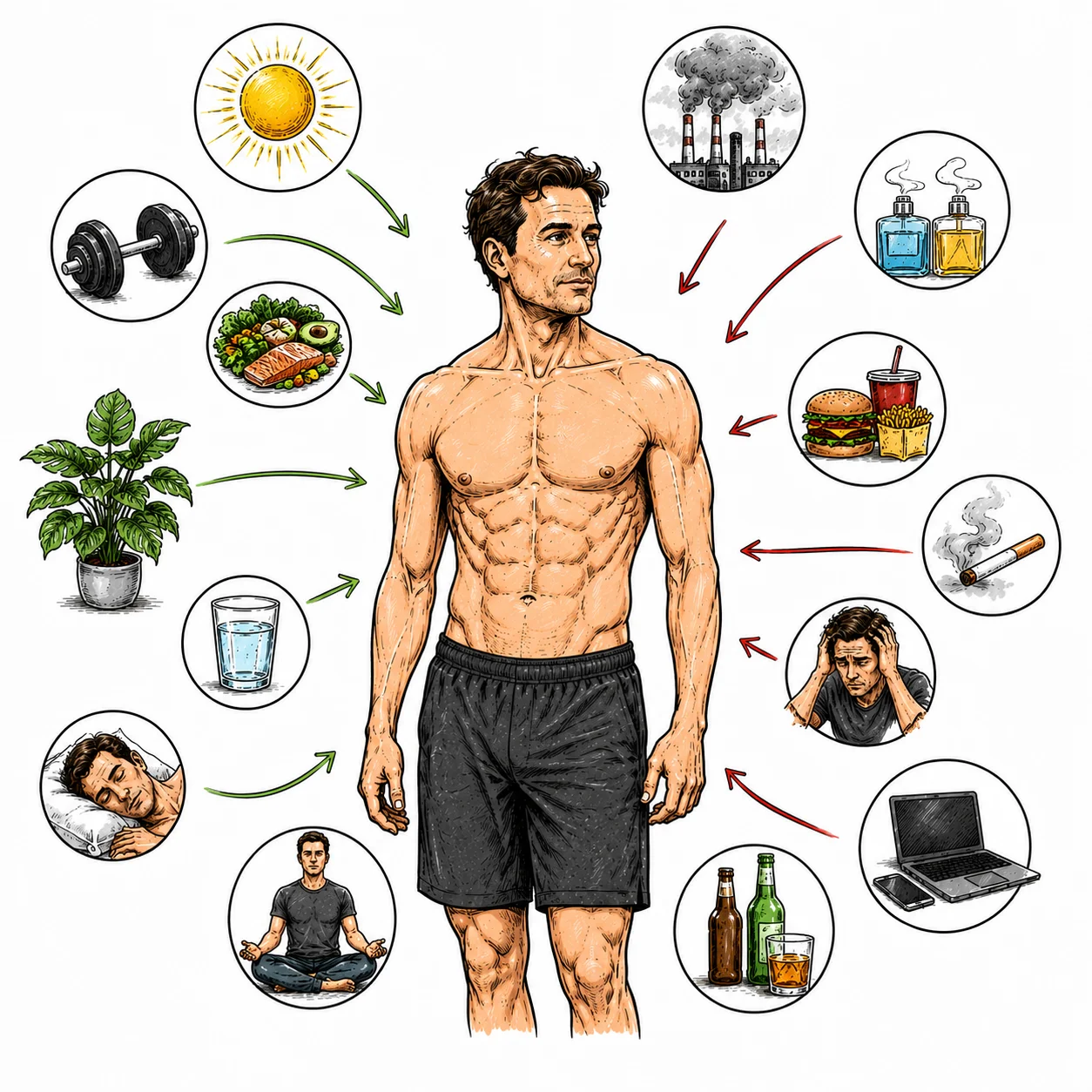
The final pillar is about the invisible inputs that accumulate quietly over years, both the nourishing ones you want more of, and the disruptors you want to eliminate.

Let the Sun In

Morning sunlight within an hour of waking sets your circadian clock, naturally suppresses residual melatonin, and triggers cortisol at the biologically correct time, for natural, sustained alertness. Afternoon sun drives vitamin D production.

More than 90% of our vitamin D comes from UVB exposure, a nutrient linked to immune function, bone density, mood regulation, and hormonal health. No supplement replaces it as effectively as being outside.

✓ Research Support

Stanford, NIH, and Cleveland Clinic research confirms morning light exposure improves sleep quality, mood, and metabolic function. Phototherapy with morning light demonstrates antidepressant effects comparable to pharmacological treatments for seasonal affective disorder.

⚠ Worth Knowing

Excessive UV exposure increases skin cancer risk. Avoid burning. Use zinc oxide-based physical sunscreen for extended midday exposure. Most chemical sunscreens contain oxybenzone and octinoxate, both recognized endocrine disruptors.

Ground Yourself

Earthing, direct skin contact with the earth's surface (bare feet on grass, soil, or sand), is based on the hypothesis that the earth's naturally occurring free electrons help neutralize free radicals and reduce systemic inflammation.

✓ Research Support

NIH-published studies have found reduced cortisol, improved sleep quality, reduced pain scores, and faster wound healing associated with regular earthing. A 2025 randomized controlled trial found earthing mats significantly reduced insomnia severity and daytime sleepiness.

⚠ Worth Knowing

Most grounding studies are small and methodologically limited. No definitive disease-prevention claims can be made from current evidence. The practice is free, low-risk, and deeply compatible with a nature-connected lifestyle. The downside is genuinely negligible.


Reduce Invisible Stressors

What you avoid matters as much as what you do. These are the quiet disruptors worth addressing:

  • 💧
    Fluoride A systematic review and dose-response meta-analysis found that elevated fluoride exposure may affect thyroid function, particularly in those who are iodine-deficient. Use filtered water where possible. Note: effects are most documented at levels higher than standard water fluoridation.
  • 📡
    EMF & WiFi in the Bedroom Move your router out of your bedroom. Put your phone on airplane mode at night. Long-term evidence is still evolving, the precautionary principle applies, and the cost of this change is zero.
  • 📱
    Blue Light at Night Blue light from screens after sunset suppresses melatonin and delays sleep onset, well-established science. Blue-light blocking glasses (amber-tinted, ≥1.0 mDFD rating) show sleep benefits, especially for those with disrupted patterns. Not all glasses labeled "blue blockers" are effective, look for verified filter ratings.
  • 🌸
    Synthetic Fragrances Peer-reviewed studies link synthetic fragrance chemicals (phthalates, musks, aldehydes) to respiratory irritation, allergic reactions, and endocrine disruption. Avoid commercial perfumes, synthetic air fresheners, and heavily fragranced products. A 2025 Frontiers in Toxicology review links them to perturbation of the endocrine-immune-neural axis.
  • 🔇
    Noise Pollution Chronic ambient noise is a low-grade stressor. Even moderate background noise activates the sympathetic nervous system over time. Silence is not a luxury, it is a health input.
  • 📲
    Social Media Use with intention. Aimless scrolling is engineered to be addictive and reliably correlates with anxiety, social comparison, and disrupted sleep. Set deliberate limits and honor them.

Rest and Stillness

  • Sleep: Non-negotiable. Poor sleep undoes most positive effects of diet and exercise. Dark room, cool temperature, consistent sleep/wake times, no screens 1 hour before bed.
  • Meditation, Prayer, or Stillness: Among the most robustly researched interventions for reducing chronic stress, lowering cortisol, and supporting long-term mental and physical health.
  • Sunblock: Most chemical sunscreens are harmful. Use zinc-based physical sunscreens if needed.

Habits & exposure philosophy also inspired by:

Follow @kashkhanofficial
Nelson Inno

CEO, WeSpark Innovation Agency

−30 Pounds. 30 Days. One Carnivore Month.

Diet gets you 80% of the results

I didn't stumble into this philosophy by accident. After years of dealing with health challenges, and growing frustrated at how conventional medicine treated symptoms rather than root causes, I decided to go all in.

I committed to a strict carnivore month: meat, eggs, animal fats, and water. The results were beyond what I expected. Thirty pounds in thirty days, but more than that, my energy, mental clarity, and overall sense of wellbeing shifted in ways no medication had ever produced.

That was the turning point. I now live this way, not as a restrictive diet, but as a lifestyle built around real food, natural movement, and intentional habits. This website documents what I've learned, and I will continue updating it as new studies emerge and my understanding deepens.

Along the way I also adopted a broader philosophy that shapes everything, not just how I eat, but how I live:

Quality over quantity.
Slow over fast.
Calmness over noise.

Health is bioindividual. This is what worked powerfully for me, do your own research and consult a professional before making major changes.

Follow @nelsoninno Read my full biography →

Disclaimer: This website represents one person's personal research journey and lived experience. This is not medical advice. The studies and data referenced are ongoing and evolving. Some claims are well-supported by peer-reviewed research; others are based on emerging, contested, or limited evidence. Always consult a qualified healthcare professional before making significant changes to your diet, supplementation, or lifestyle, especially if you have pre-existing medical conditions. Do your own research.